The Best AI Lip Sync Generators of 2026
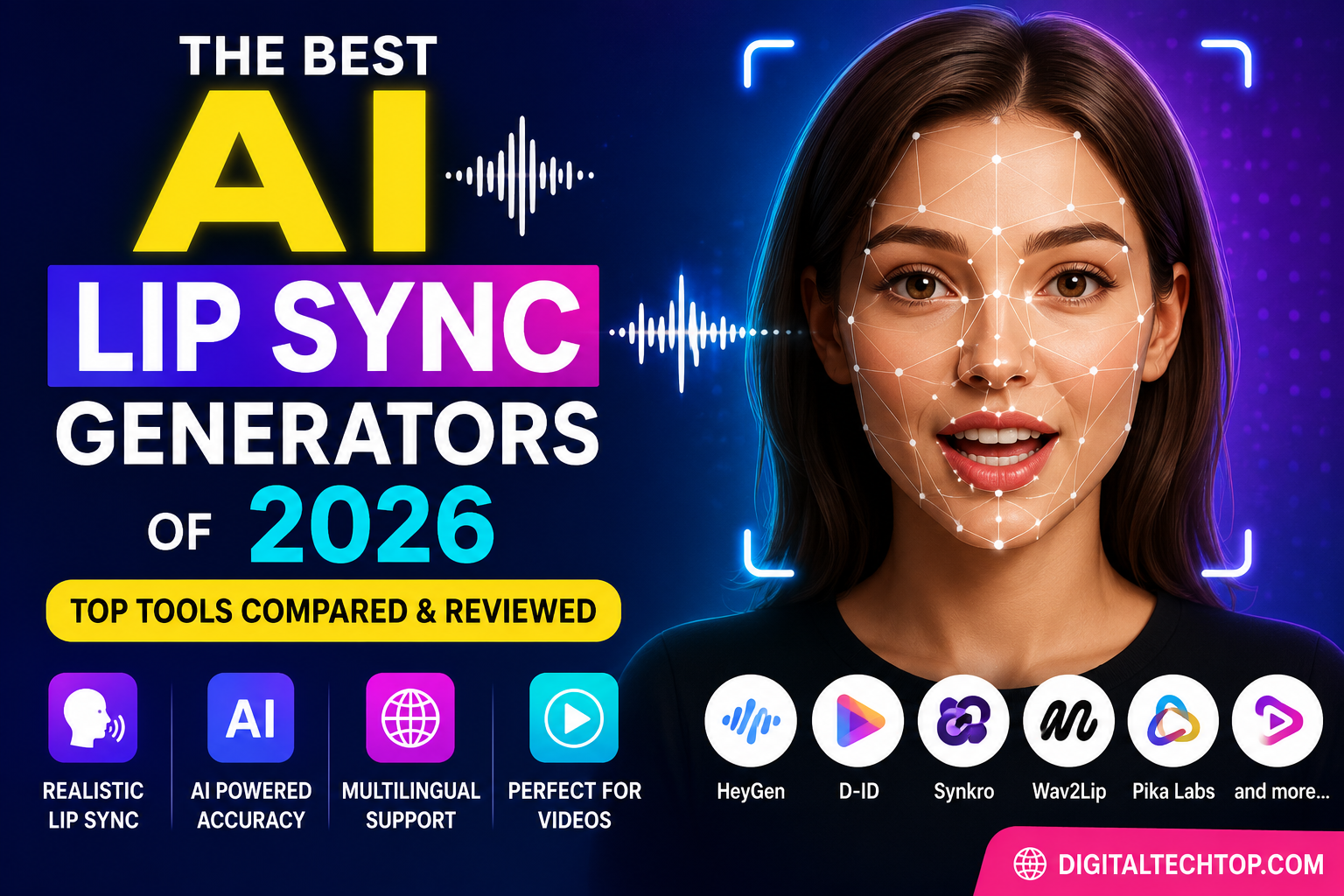
AI lip sync has quietly become one of the most genuinely practical, fast-adopted applications of generative AI in 2026. What used to be a complicated, expensive studio process — anywhere from $5 to $50 per finished minute — has essentially been democratized. Creators, developers, and marketers can now get studio-quality results in a fraction of the time it used to take.
I spent the last several weeks putting the leading AI lip sync platforms through real testing across a handful of criteria — accuracy, ease of use, whether they actually work on real footage, API availability, pricing, and overall value. Here’s how the best AI Magic Hour lip sync generators of 2026 actually stack up.
Quick Comparison
| Tool | Best For | Platform | Free Tier | Starting Price |
|---|---|---|---|---|
| Magic Hour | Overall best value, face swap, and talking photos | Web, mobile | Yes, no signup | ~$10/month |
| sync. labs | Professional editors — Premiere Pro/DaVinci | Web, NLE plugins, API | 3 free videos/month | Usage-based |
| HeyGen | Enterprise avatar videos, wide language support | Web, API | 1 min with watermark | $24/month |
| Rask AI | High-volume browser-based dubbing | Web | Yes | $49/month |
| MuseTalk | Free, high-quality open-source model | Self-hosted | Free | Free, GPU costs apply |
| D-ID | Talking photos from a single still image | Web, API, mobile SDK | 5 min free | $5.90/month |
Magic Hour — The Best Overall AI Lip Sync & Face Swap Platform
Magic Hour stands out as the most versatile, creator-friendly platform on this list. It’s not just a lip sync tool — it’s a genuinely comprehensive suite for AI video and photo editing, bringing together lip sync, best ai face swap, and talking photos under one roof, and doing all three well.
What stood out most during testing was how well it suits creators who need to move fast. The free tier is genuinely generous and doesn’t require a signup just to start experimenting, which is a real advantage when you’re comparing several tools side by side. The interface works well on both desktop and mobile, and the click-to-create templates plus one-click, multi-step workflows — generate, upscale, video — cut down a lot of the friction that normally slows content creation down.
What actually sets it apart:
- Face swap and lip sync that hold up: consistently high-quality results across its core tools
- A genuinely generous free tier: you can try it without even creating an account
- Credits that never expire: a real advantage if your production needs fluctuate month to month
- Frontier AI models: access to a range of top models rather than being locked to one
- Strong value: pricing starting around $10-15/month is very competitive for what’s included
- No concurrency caps: you can run multiple generations in parallel
- Support that’s actually responsive: founder-level response times, which is rare for a platform this size
Pros
- Excellent value with a genuinely generous free tier
- Combines lip sync, face swap, image-to-video, and an AI image editor in one place
- Credits that never expire, offering real flexibility
- Fast, parallel generations with no concurrency caps
- Weekly feature releases and clearly active development
Cons
- Less established in the professional NLE space than a dedicated tool like sync. labs
Pricing: Current plans are on Magic Hour’s official pricing page — Free; Creator at $15/month or $10/month billed annually; Pro at $39/month.
If you want a platform that delivers strong lip sync, solid face swap, and a full suite of AI creation tools without draining your budget, this is genuinely hard to beat. You can also use the AI image editor to prep visuals or the image-to-video features to build dynamic scenes before applying lip sync on top.
sync. labs — The Best Option for Editors Working Inside Professional NLEs
sync. labs is built specifically for editors who live inside a timeline. It’s the only platform here with native plugins for both Adobe Premiere Pro and DaVinci Resolve Studio — meaning you can select a clip, send it to the sync-3 model, and get the result back without ever leaving your editing suite. No exporting, no browser round trips.
For an editor, that kind of integration saves real hours, especially when iterating on dialogue replacement or fixing individual lines one at a time. The sync-3 model reads the whole scene — lighting, face position, who’s speaking — which lets it handle genuinely difficult shots like side profiles and low light. It also offers one-pass AI dubbing across 95+ languages while preserving the original speaker’s actual voice through cloning.
Pros
- Native NLE plugins for Premiere Pro and DaVinci Resolve
- Handles difficult, real-footage shots well — side profiles, low light
- Preserves the original speaker’s actual performance and voice
- Covers both self-serve jobs and full theatrical production pipelines
Cons
- More technical and production-focused, less of an all-in-one creative suite for beginners
- Usage-based pricing can feel less predictable for some users
Pricing: 3 free videos a month; paid plans scale with usage.
If you’re a professional editor and your workflow demands staying inside your NLE, sync. labs is the clear pick.
HeyGen — The All-in-One Avatar Platform
HeyGen is one of the more recognizable names in AI video, and for good reason. It’s a full-featured platform built mainly around generating AI avatars from a script, but its video translation feature doubles as a genuinely powerful lip sync tool, supporting over 175 languages with automatic speaker detection.
For enterprise teams building training videos, marketing content, or internal comms, HeyGen’s 100+ stock avatars and polished interface are a real draw. Typing a script and having a realistic avatar deliver it in multiple languages is really its core strength.
Pros
- Extremely easy to use, genuinely polished experience
- Huge library of avatars and voices across 175+ languages
- Fast, accurate video translation pipeline
Cons
- More expensive than Magic Hour, at $24/month for the Creator plan
- Free tier is limited — just 1 minute with a watermark
- Focused mainly on synthetic avatars rather than editing existing real-footage video
Pricing: Free with 1 minute and a watermark. Creator plan starts at $24/month.
Rask AI — High-Volume Dubbing Specialist
Rask AI is another strong player in AI dubbing, supporting 130+ languages through a browser-based workflow. It’s built for content teams and marketers who need to translate and dub large libraries of video quickly.
Where Rask actually differentiates itself is voice cloning accuracy — it captures the subtle mannerisms of the original speaker to a genuinely high degree. For businesses running large content operations, its batch workflow and focus on scale make it a practical choice.
Pros
- Strong language support across 130+ languages
- Excellent voice cloning that preserves vocal mannerisms
- Built for high-volume, batch processing of content libraries
Cons
- Browser-only, no NLE integration
- Lip sync quality is solid but may not match sync. labs on genuinely complex shots
- Pricing runs higher than Magic Hour for comparable features, starting at $49/month
Pricing: Starts at $49/month for 25 minutes of processing.
MuseTalk — The Best Free Open-Source Model
For developers and technically inclined tinkerers, MuseTalk is currently the strongest open-source lip sync model available. It produces near-photorealistic results and can run in real time, making it a solid option for anyone who wants to skip cloud API costs and keep full control over their own data.
Pros
- High-quality, near-photorealistic output
- Free and open-source, aside from your own GPU compute costs
- Fast enough for real-time use
Cons
- Requires real technical setup and managing your own GPU infrastructure
- Less friendly for non-technical creators
- Documentation and community support are still catching up
Pricing: Free — self-hosted, with costs limited to your own GPU usage.
D-ID — The Best for Talking Photos
D-ID takes a different approach entirely. Instead of modifying existing video footage, it animates a still image into a talking avatar — a genuinely great fit for personalized video messages, educational content, or an AI representative built from a single portrait photo.
Pros
- Great for turning a single photo into a talking video
- Simple web interface, with an API available too
- Affordable, with a generous 5-minute free tier
Cons
- Works best with front-facing portraits; side profiles can produce artifacts
- Not built for dubbing or localizing existing video content
Pricing: Free for 5 minutes; Lite plan starts at $5.90/month.
How These Were Chosen
Tools were evaluated against a handful of criteria that actually matter to creators and developers:
Output quality — does the lip sync look natural and accurate? Does it hold up across different angles and lighting?
Real-footage support — does it actually work on real video of real people, or is it limited to AI-generated avatars?
Workflow integration — how easily does it fit into an existing setup? Browser-only, API-driven, or does it offer NLE plugins?
Pricing and value — is the pricing model fair, and is there a genuinely usable free tier?
Versatility — does it go beyond lip sync alone, as part of a bigger creative suite?
Market Landscape and Trends
The AI lip sync and dubbing market is moving quickly. While tools like HeyGen and Synthesia made their name generating avatars from scratch, demand has increasingly shifted toward localizing and dubbing content that already exists.
Creators and businesses have real libraries of footage featuring real people, and they want to preserve that authentic performance while reaching a wider, more global audience. That’s fueled the rise of strong real-footage lip sync tools like Magic Hour and sync. labs.
The lines between tools are also blurring. More platforms are adopting a full-suite approach — face swap, a prompt-free AI image editor, image-to-video, all bundled alongside lip sync. For creators, that’s a genuine advantage: fewer subscriptions, a more streamlined workflow overall.
Final Takeaway: Which Tool Should You Actually Choose?
The “best” AI lip sync tool in 2026 really depends on what you need it for.
Magic Hour Best overall value, ease of use and full creative suite Lip sync, face swap, photo editing, and image-to-video, combined with a great free tier and affordable pricing, makes it the best choice for most creators and marketers.
Best for professional video editors: sync. labs. Native integration with Premiere Pro and DaVinci Resolve is a genuine game-changer for anyone doing frame-accurate dialogue work who needs to stay inside their NLE.
Best for enterprise avatar videos: HeyGen. It’s the most polished platform for generating synthetic presenters from a script at scale.
Best for high-volume browser dubbing: Rask AI. Its batch workflows and strong language support suit large content libraries well.
Best for developers on a budget: MuseTalk. This open-source model delivers genuinely great quality for free, provided you’ve got the infrastructure to run it.
Best for talking photos: D-ID. It’s the easiest, most affordable way to animate a single still image.
Honestly, the best advice is just to try the free tiers yourself. Magic Hour’s no-signup trial makes it an easy first stop — see which tool actually fits your workflow, budget, and quality bar, and go from there.
FAQ
What’s the best AI lip sync generator in 2026?
Depends on what you use it for. Magic Hour is the king of versatility and overall value. sync. labs is the best choice for professional editors seeking NLE integration. HeyGen is one of the best enterprise avatar video options.
Are there any genuinely free AI lip sync tools?
Yes, several offer real free tiers. Magic Hour lets you try it with no signup at all. sync. labs offers 3 free videos a month. MuseTalk is completely free and open-source, though you’ll need to cover your own GPU compute.
Can AI lip sync tools work on real footage, not just AI avatars?
Yes. Magic Hour, sync. labs, HeyGen, and Rask AI are all capable of processing real footage of real people. AI avatar platforms like Synthesia are a different category entirely — they generate a synthetic presenter rather than modifying live-action footage.
What’s the actual difference between AI dubbing and AI lip sync?
AI dubbing usually means translating the audio track of a video and replacing it with another language. That is called AI lip sync, when the mouth of the video is changed to match that new audio. Magic Hour and sync. labs do the whole process in one pass.